Transition to distance learning receives mixed reviews
by Michael Sicoli
The outbreak of COVID-19 has caused students and teachers to move from vivacious classrooms to structured, online Zoom conferences. Given that on-campus classes are closed, this is a nation-wide adjustment as people come to terms with the new world created by the pandemic.
The transition has forced everyone involved to adapt and refocus. Many students have struggled with this adjustment. First-year sports management major Bryce Husted, 18, a student at University of Tampa, believes that he is no longer getting the most out of his college experience.
“Most of my classes changed their syllabus to make it easier on us so we aren’t really learning as much,” Husted said. “It’s less interactive.”
Class participation is widely acknowledged by teachers as an integral part of the learning process. If students are not engaging in activities, they lose interest and fail to learn at the highest level. Nik Aprahamian, 18, a first-year business major at the University at Buffalo, feels the same way.
“I do not feel like I’m getting the most out of my college experience as I am no longer at school or able to interact with my peers,” Aprahamian said. “I also am not getting the full experience of a college course as professors don’t seem to be putting much effort into the new class style.”
A big reason why Aprahamian feels this way is due to how the course is being taught. Similar to Husted, and many college students across America, he misses the interactivity between students and teachers. Talking to a classmate on the side, asking a question or raising your hand goes a long way toward completing the classroom feel. At a larger school (University at Buffalo has over 21,000 undergraduate students), teachers are not able to effectively hold massive Zoom conferences, which leads to an upload-and-move-on model.
“Online courses could be improved if more effort is put in by the professors to teach students the material instead of putting out PowerPoints and online lectures for the students to learn themselves,” Aprahamian said.
International students have endured more hardship than most. For many international students it was a challenge to merely get back home, as flights were limited. With this transition to off-campus classes, the time zone difference has resulted in a very challenging schedule for students.
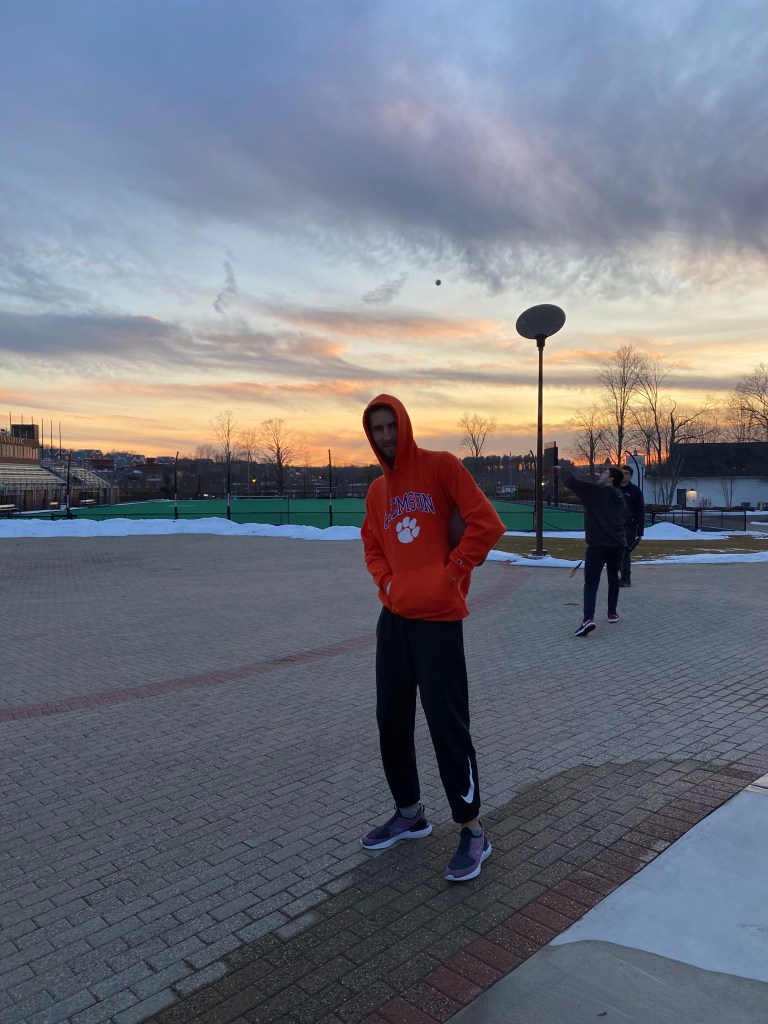
“Being an international student has been painful for the last month of online classes,” Lachie Harvey, 19, a first-year media studies major at Quinnipiac University, said. “I’m waking up at 4 a.m. for classes, starting this week I’m waking up at 1 a.m. for a class. The time difference is killer.”
The New Zealand native did note that, outside of the time zone difference, he does not hate online classes. However, he does feel like he is no longer receiving the most out of his college experience.
“I believe the most important part of college is the connections and friendships, which have been cut off,” Harvey said.
International students are not the only select group having a hard time getting to class. According to The Indianapolis Star, there are plenty of students who lack the required internet connection to connect to a Zoom or Google Meets call. The article shares the stories of Indiana students like Rebecca Uesseler, a student in the Lanesville Community school district, who has to drive 15 miles to a local elementary school to receive adequate Wi-Fi. Another Indiana-based student, Amelia Ross, a junior at Connersville High School, cannot use the internet at home unless everyone else logs off. Clearly, students from smaller towns in rural areas are struggling more than many may realize.
The transition, of course, goes both ways. Teachers have had to adjust just as much, if not more than their students as the original syllabus may not transition well to an online format. Quinnipiac professor Peter Gallay teaches JRN-106 – Multimedia Production Technology – a class that is centered around hands-on learning using camera recorders, tripods and light stands. Given the online, off-campus nature of the class now, Gallay has had to adjust his plans for the class.
“With these unprecedented times, we had to change the syllabus in order to fit with the resources that students had at their disposal,” Gallay said. “And so, it was a little bit of a challenge to identify what resources students had on-hand.”
Gallay has introduced “vlogs” into his syllabus, allowing students to video with just their phone and whatever is around the house. Students have free access to Adobe Premier, so students still have the ability to create content, edit and produce work as if they were still on-campus.
“With the way that everything happened on such a quick turnaround and how we had to adapt very quickly, it’s not as ideal as I would have hoped if I had more time to plan it,” Gallay said. “I do believe that, at the end of the semester, … students will be able to take away at least the same, if not more value from the course than if it had been on-ground the whole time.”
For teachers with much younger students, the transition has been even tougher. Commack, New York, native Natalie Sicoli, 52, has been a special education teacher in the Bellmore Union Free school district for 22 years. The mother of three is currently working nonstop to reach her students in the most effective way.
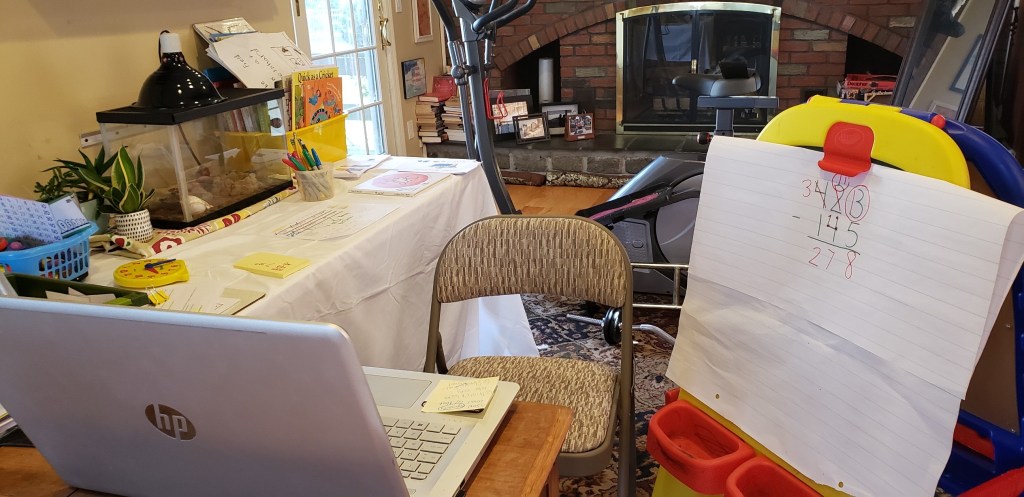
“I’ve implemented Google Classrooms, which I have never used before, so I’m still differentiating all the material for two different grades for different group abilities,” Sicoli said. “I have to scan and print every document for them so I can modify it, and then upload it to the Classroom. I am doing Google Meets two times a week so the kids can see me, and we can do virtual teaching, and we are conducting parent meetings and conferences through Microsoft Teams.”
To sum it up, teachers are working hard to make things work.
The transition to online classes has been no easier for teachers, according to Sicoli.
“(It’s been) very difficult,” she said. “I have special education, self-contained first and second graders who need to learn with a hands-on approach and online teaching does not offer a true hands-on approach.”
It’s a shame that online classes seem to be failing students, despite the hard work of the professors. But everyone agrees that this is a unique situation, and that the decision to go online has, for the most part, been making the best out of a horrific situation.
###
Source List:
- Bryce Husted, 18, sports management major, first-year, University of Tampa, 516-680-8825, Commack, New York, text interview.
- Nik Aprahamian, 18, business major, first-year, University at Buffalo, 917-796-2693, Commack, New York, text interview.
- Lachie Harvey, 19, 3+1 media studies major, first-year, Quinnipiac University, 475-414-4331, Auckland, New Zealand, text interview
- Peter Gallay, 36, Director of Film/Video, Quinnipiac Productions Part-Time Faculty, Quinnipiac University, 203-582-8584
- Natalie Sicoli, 52, special education teacher, 22 years, Bellmore Union Free, 516-662-6931, Commack, New York, in-person interview
Bibliography:
Herron, A. (2020, March 26). Coronavirus pushed school online. But what happens when you don’t have internet at home? https://www.indystar.com/story/news/education/2020/03/26/e-learning-creates-challenges-rural-indiana-schools/2901236001/
 Michael Sicoli's Blog